So, somehow we thought that the first course of the meal had something to do with seafood. In retrospect, I have no idea why we thought that. Anyway, what we got was ox bone marrow.
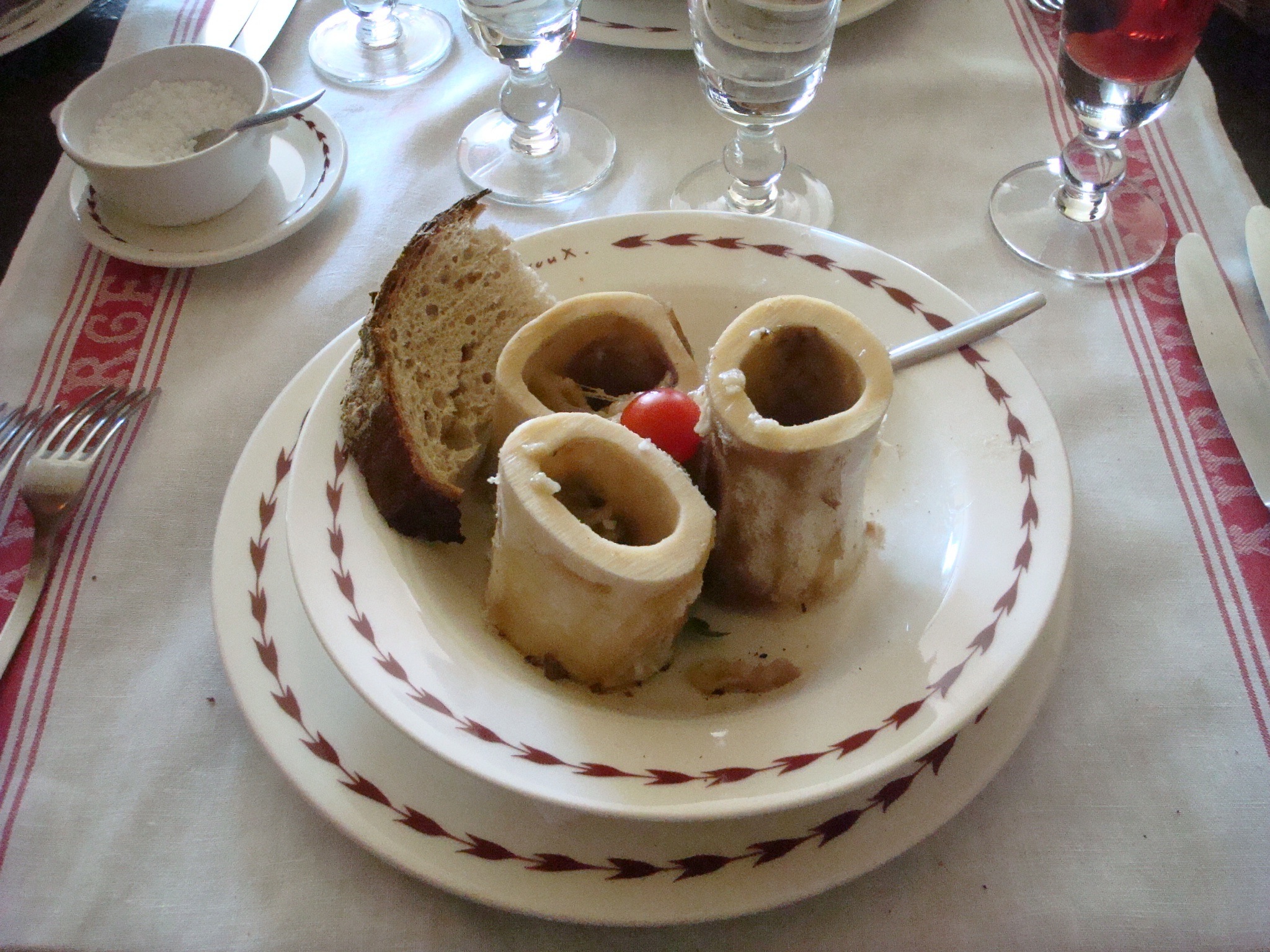
We each had three pieces of bone, cut across about 2 inches high filled with marrow, three points of bread and coarse salt. Wonder if Van Gogh had this for dinner? Well, it reminded me of the first time I had a plate of oysters in front of me. Nothing to do but to dig in. What did it taste like? Nothing much. The consistency of jellied yogurt. Take the little spoon, dig it out, put it on the bread, sprinkle a few little rocks of the salt. The very definition of subtlety. We ate it all. It felt very rich. Washed it down with our rosé wine (rosé wine became one of the themes of our trip). Would I have it again? Sure.
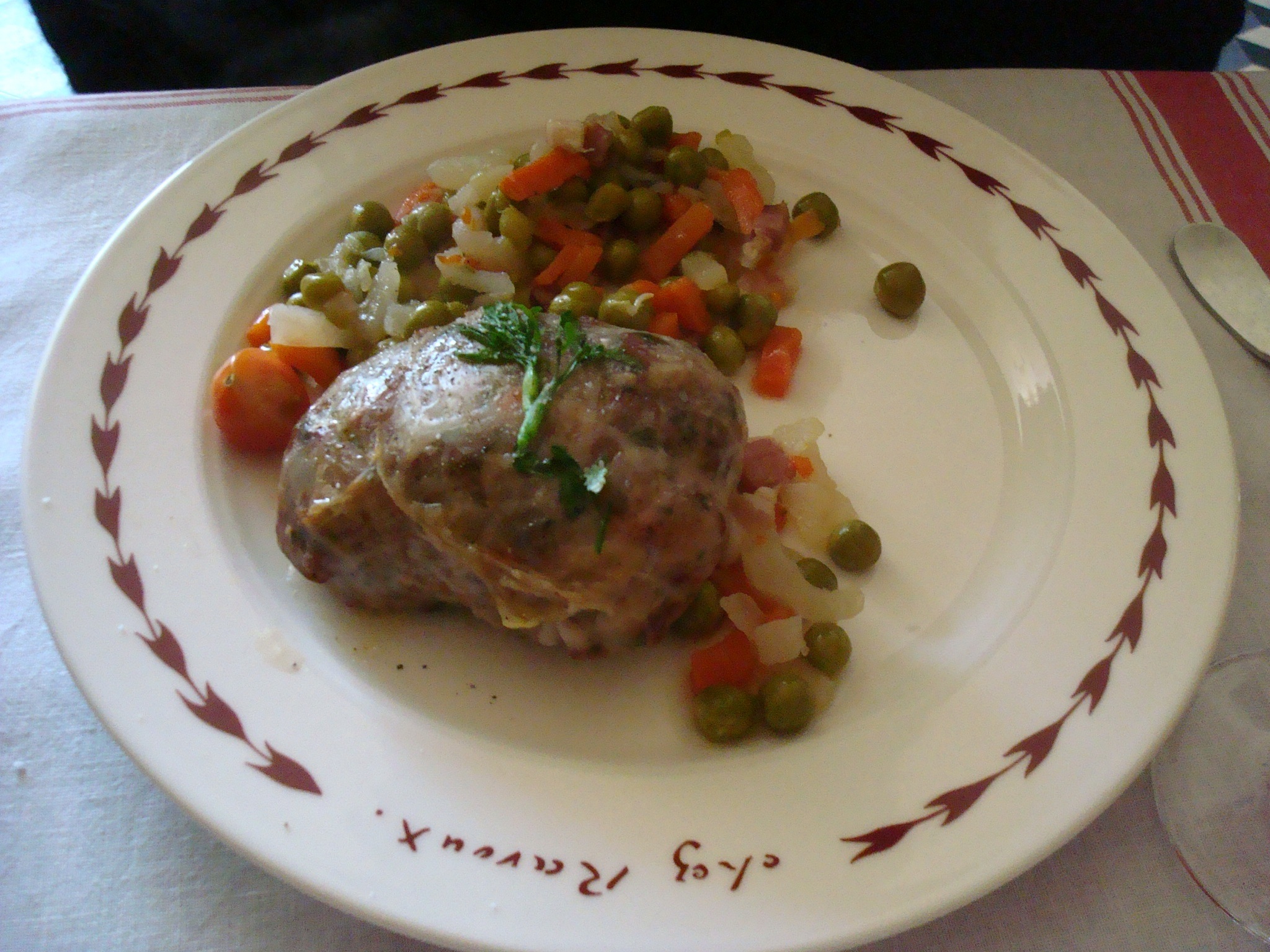
Next, came a cast iron pot with two bundles, probably wrapped in gut, of chopped pork, vegetables and spices. It felt very 19th century authentic and was quite filling. And for dessert – Ile flottante, or floating island – which is meringue floating on crème anglaise. A delightful dessert, subtle and very tasty.

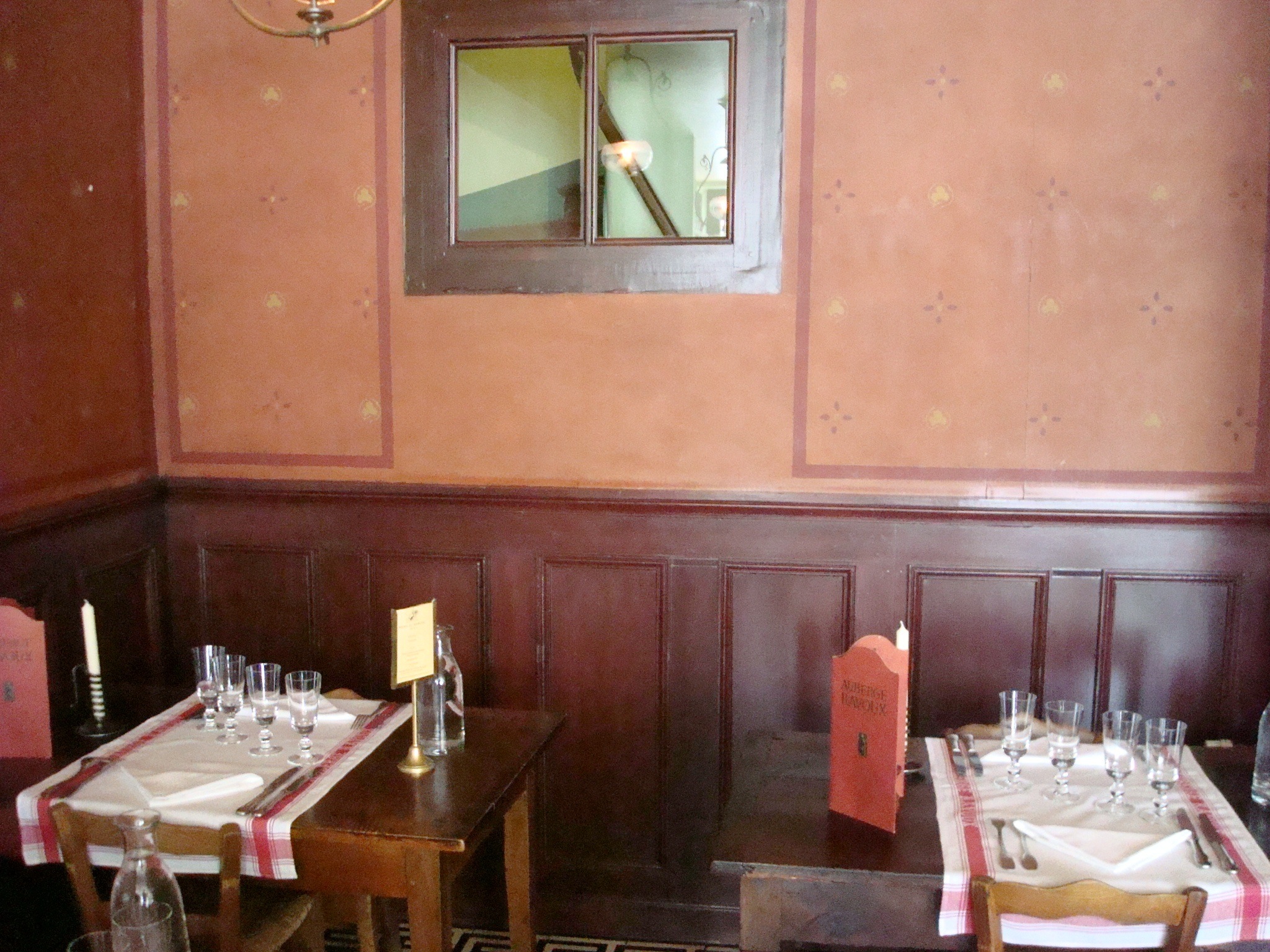
However, as you might imagine, the actual food was only part of the story here. To think that we were sitting in the same place that Van Gogh ate for the last two months of his life. You couldn’t help but reflect on that. I wondered whether he ate alone, or sat at a bigger table with others. Did they want to see his paintings? Did he ever show them off? After all, he was very productive here, painting about one a day. There has never been a mention of any of his paintings on display in the restaurant. It was a simple yet beautiful room with wood paneling and very basic wooden tables and chairs. I wondered whether it had been this elegant back then.
At a table at the front were a group of people who seemed to be touring the building, being fussed over by a man who seemed to be the manager and two waitresses. They had an appetizer of home-made sausages, then all got up to go out the back, and I assume to see the room upstairs. When they came back a few minutes later, they had roast beef, carved at the table and vegetables. The manager was very solicitous. In my mind I imagined the guests were from the ministry of tourism, or some other government department.

And since we’d had a meal of firsts, it was only fitting to finish it with something neither of us had ever had – absinthe. Time to join the famous absinthe drinkers including Charles Baudelaire, Arthur Rimbaud, Toulouse-Lautrec, Oscar Wilde, Aleister Crowley and of course Van Gogh. Absinthe was banned for many years because it has a bit of thujone in it which is apparently an addictive psychoactive drug. But people came to their senses and realized there was only a little of it in there, and it was no more dangerous than all the other spirits so commonly available. (People get a bit nuts when you tell them there is a trace of something that might be called a drug in there, but have no problem draining gallons of high-proof alcohol).
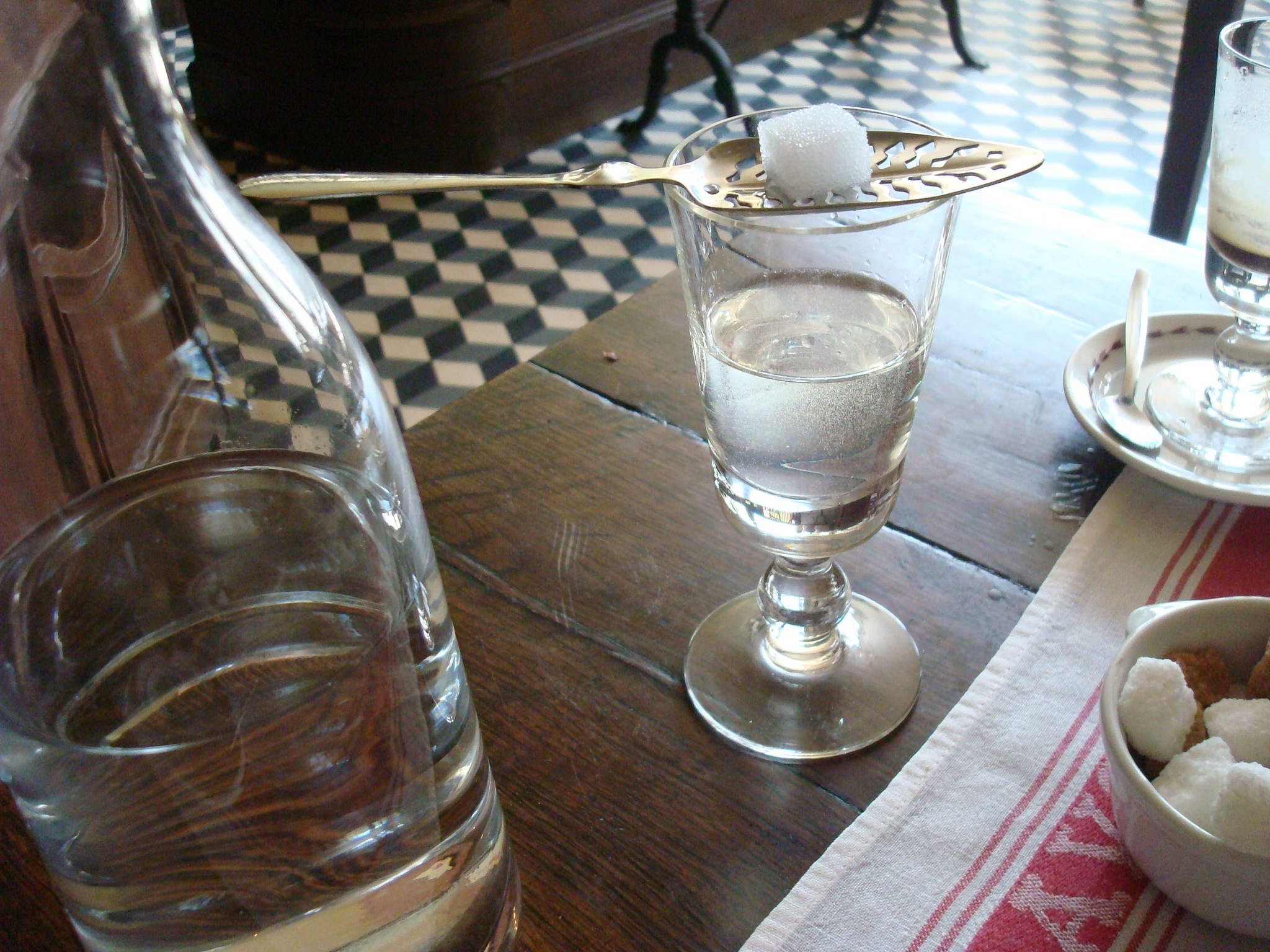
They set up the glasses with the slotted spoons each with a sugar cube on it. The absinthe came in a small pitcher. We poured it over the sugar cube into the glass. How was it? Herbal, a bit medicinal, sort of like Jagermeister, but different.
We were happy here. We lingered. No sense rushing it.
Finally it came time. We still had a few things to see – the famous church, the cemetery and Dr. Gachet’s house.
We left by the back entrance where there was a little display of pictures of the Ravoux family, an old phone and the Auberge Ravoux cookbook (which I bought later online).

It had been a wonderful lunch. Now out through the back courtyard and up the little roadway right next to the Auberge. It went up quite a hill. We imagined what the funeral procession must have been like on that hot July day.